The rise of the gig economy has transformed how Singaporeans earn a living. From private-hire drivers and food delivery riders to freelance designers, tutors, and digital marketers, more people are choosing flexible work arrangements over traditional full-time employment.
However, when unexpected expenses arise, securing a personal loan can be challenging without a fixed monthly salary. Many freelancers and gig workers worry that their fluctuating income or lack of traditional payslips could prevent them from qualifying for financial assistance.
The good news is that being self-employed does not automatically disqualify you from borrowing. Whether you approach a bank or a licensed money lender, your eligibility generally depends on your ability to demonstrate a reliable income, meet the lender’s requirements, and afford the repayments.
This guide explains how freelancers and gig workers in Singapore can qualify for personal loans, what documents they need, and how to choose a borrowing option that suits their financial circumstances.
1. Why Is Getting a Personal Loan More Challenging for Freelancers?
Irregular Income Makes Financial Assessment Difficult
Traditional salaried employees usually receive a fixed monthly salary, making it easier for lenders to assess their financial stability. Freelancers and gig workers, on the other hand, may experience significant fluctuations in their monthly earnings.
For example, a freelance graphic designer might earn S$5,000 during a busy month but only S$2,000 the following month. Similarly, a private-hire driver may experience changes in earnings due to seasonal demand, working hours, and operating expenses.
Lenders must determine whether borrowers can maintain regular loan repayments despite these fluctuations. As a result, freelancers may need to provide additional documentation to demonstrate their earning capacity.
Lack of Traditional Employment Documents
Most full-time employees can provide monthly payslips and employer-issued income statements when applying for financing. Self-employed individuals may not have access to these documents because they receive payments directly from clients or digital platforms.
Instead, they may need to submit bank statements, tax assessments, invoices, or other records showing their income history. Preparing these documents beforehand can help lenders assess their applications more efficiently.
2. Can Freelancers and Gig Workers Apply for Personal Loans in Singapore?
Yes. Freelancers and gig workers can apply for a personal loan in Singapore, provided they satisfy the lender’s eligibility criteria.
However, different financial institutions have different requirements regarding income verification, employment history, and creditworthiness.
Personal Loans From Banks
Banks may offer unsecured personal loans to self-employed individuals who meet their income and credit assessment requirements. Some institutions accept freelancers and business owners, although they may request additional documents to verify income stability.
Applicants may need to provide their latest Notice of Assessment from the Inland Revenue Authority of Singapore (IRAS), alongside bank statements or other supporting financial records.
Banks may also review outstanding debts and credit history before determining whether an applicant qualifies.
Personal Loans From Licensed Moneylenders
A licensed money lender offers another regulated borrowing option for freelancers and gig workers who may not satisfy a bank’s lending requirements.
Licensed moneylenders in Singapore operate under the Moneylenders Act and are regulated by the Ministry of Law through the Registry of Moneylenders. They must assess a borrower’s financial circumstances and comply with applicable borrowing limits, interest rate caps, and fee restrictions.
Some lenders may accept alternative income documents from self-employed applicants, although approval is not guaranteed.
Before applying, always verify that the lender appears on the Ministry of Law’s official list of licensed moneylenders.
3. What Documents Do Freelancers Need to Apply for a Personal Loan?
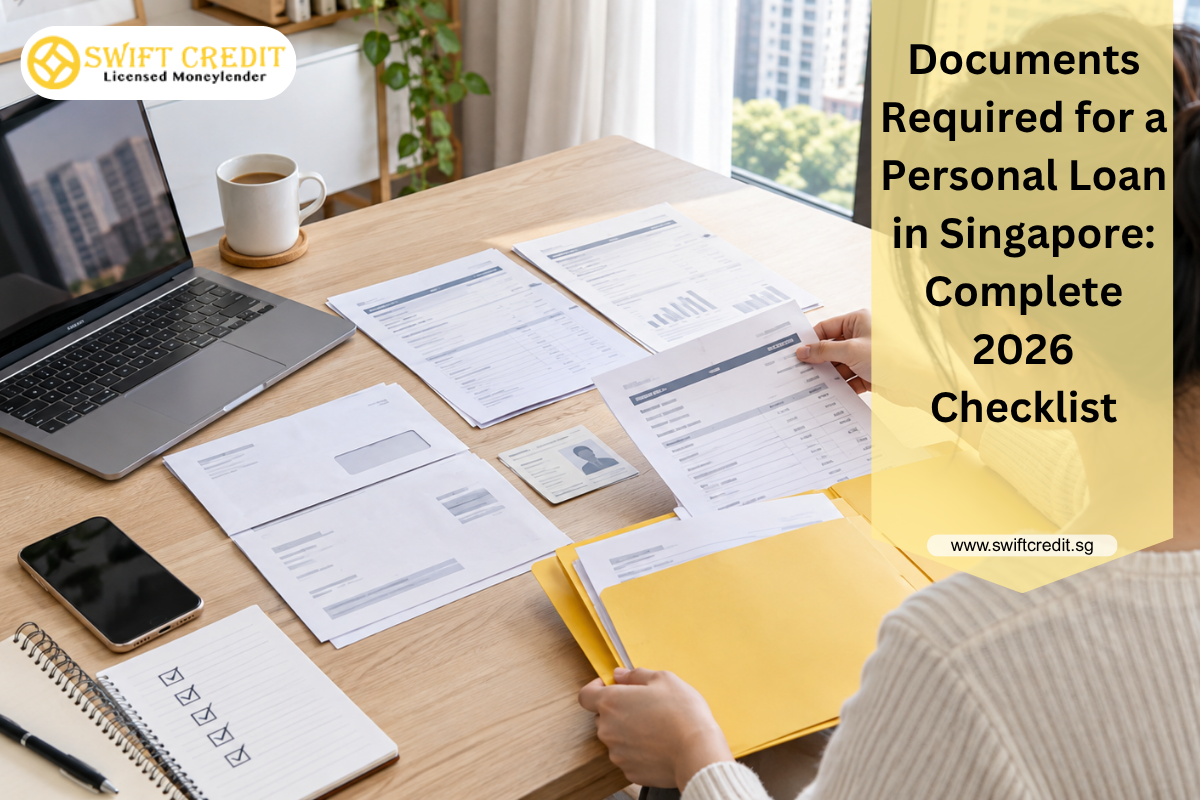
Freelancers and gig workers should prepare documents demonstrating their identity, income, and financial commitments. The exact requirements vary depending on the lender and the applicant’s circumstances.
Proof of Identity and Residential Address
Singapore citizens and permanent residents may be asked to provide their NRIC for identity verification. Foreign applicants may need to present a valid passport, work pass, and other relevant identification documents.
Lenders may also require proof of residential address, particularly if the information cannot be verified through other official records.
Bank Statements Showing Regular Income
Bank statements are particularly important for freelancers who receive payments directly from clients or gig platforms. They help lenders evaluate income frequency, cash flow, and whether earnings are sufficient to support monthly repayments.
For example, a food delivery rider may submit bank statements showing regular payments from delivery platforms. A freelance photographer may provide records of client payments received over several months.
Lenders may request three to six months of bank statements or a different period, depending on their assessment requirements.
Income Tax Records and Invoices
Self-employed individuals may use their latest IRAS Notice of Assessment to demonstrate their declared annual income. Freelancers can also prepare invoices, client contracts, and payment records to support their applications.
These documents help establish a clearer picture of the applicant’s earning history, particularly when monthly income varies.
Where applicable, business registration documents and financial statements may provide further supporting evidence.
4. How Do Lenders Assess Freelancers’ Loan Eligibility?
Being self-employed does not automatically make someone a higher-risk borrower. However, lenders must determine whether the applicant can consistently manage repayments while covering essential living expenses.
Several factors may influence their assessment.
Income Stability and Earning History
Lenders generally consider more than a freelancer’s highest-earning month. They may examine income patterns over several months to estimate sustainable earnings.
For instance, a freelance tutor earning between S$3,000 and S$4,000 consistently may present a different financial profile from someone whose income varies significantly.
A longer and well-documented earning history can help lenders evaluate repayment affordability.
Existing Financial Commitments
Outstanding credit card balances, car loans, housing instalments, and other debts can affect how much additional borrowing an applicant can reasonably manage.
Even when a freelancer earns a substantial income, high existing debt commitments may reduce the amount available for new loan repayments.
Before applying, calculate your essential monthly expenses and existing debt obligations to determine how much you can comfortably repay.
Credit History and Repayment Behaviour
Banks and other lenders may review relevant credit information and repayment records when assessing applications. Missed payments, outstanding debts, and previous defaults may affect their lending decisions.
Maintaining timely repayments and avoiding unnecessary borrowing can help freelancers establish a more consistent financial record over time.
However, individual lenders use different assessment methods, and a positive repayment history does not guarantee approval.
5. How Much Can Freelancers Borrow From a Licensed Moneylender?
In Singapore, unsecured borrowing limits from licensed moneylenders depend on the borrower’s annual income and residency status.
These limits apply to the aggregate unsecured principal borrowed across licensed moneylenders, rather than to each lender separately.
| Annual Income | Singapore Citizens and PRs | Foreigners Residing in Singapore |
| Below S$10,000 | S$3,000 | S$500 |
| S$10,000 to below S$20,000 | S$3,000 | S$3,000 |
| S$20,000 and above | 6 times monthly income | 6 times monthly income |
For example, a Singaporean freelancer with an assessed annual income of S$36,000 may be eligible for an aggregate unsecured borrowing limit of up to S$18,000 under the applicable income-based rules.
However, this does not mean the applicant will automatically receive the full amount. Approval and the actual loan amount depend on the lender’s assessment of income, affordability, existing debts, and other relevant factors.
Freelancers should also remember that the amount they qualify to borrow may be greater than the amount they can comfortably repay.
6. What Should Freelancers Consider Before Taking a Personal Loan?
A personal loan can provide access to funds for necessary expenses, but freelancers should consider how repayments will affect their finances during periods of lower income.
Calculate Repayments Based on Your Lower-Income Months
Instead of relying on your best month, estimate your repayment capacity using a conservative income figure based on your recent earning history.
For example, if your monthly income fluctuates between S$2,500 and S$4,000, consider whether you can afford the loan instalments when your earnings fall to S$2,500 or lower.
This approach reduces the risk of committing to repayments that become difficult during slower periods.
Compare the Total Cost of Borrowing
Do not focus solely on the advertised monthly interest rate. Compare the total repayment amount, applicable fees, loan duration, and potential late payment charges before accepting an offer.
Under Singapore’s licensed moneylending regulations, the maximum interest rate is 4% per month. Licensed moneylenders may also charge late interest of up to 4% per month on overdue amounts, a late payment fee of up to S$60 per month, and an upfront administrative fee of up to 10% of the principal.
These are legal maximums, not standard charges that every lender must impose. Compare actual written loan terms carefully to understand the total cost.
Avoid Borrowing to Cover Recurring Income Shortfalls
Taking a loan to cover a temporary, necessary expense is different from repeatedly borrowing to pay for everyday living costs.
If your freelance income consistently falls below your monthly expenses, an additional repayment obligation may worsen your financial situation.
Consider adjusting your budget, building an emergency fund during higher-income months, or seeking appropriate financial guidance before taking on more debt.
7. How Can Freelancers Improve Their Chances of Loan Approval?
Although no lender can guarantee approval, freelancers can take several practical steps to prepare a stronger application.
Maintain Clear Financial Records
Keep client invoices, payment receipts, tax records, and business-related bank transactions organised. These records make it easier to demonstrate your income and explain any significant fluctuations.
Where practical, using a separate account for freelance earnings can also simplify financial tracking and help distinguish business income from personal transfers.
Build a Financial Buffer
Setting aside savings during higher-earning months can help cover essential expenses when work slows down. It can also reduce your reliance on borrowing whenever an unexpected bill arises.
A financial buffer is especially valuable for gig workers whose earnings depend on changing demand, seasonal opportunities, or platform availability.
Borrow Only What You Need
Applying for a smaller, manageable amount may reduce your monthly repayment burden and total borrowing costs.
Before submitting an application, identify the exact expense you need to cover and calculate how much you can realistically repay without compromising essential expenses.
Frequently Asked Questions
1. Can I Get a Personal Loan Without a Fixed Monthly Salary?
Yes. Freelancers and gig workers may qualify for a personal loan even without a fixed monthly salary. Lenders may accept alternative income documents, such as bank statements, tax assessments, invoices, and payment records, when evaluating an application.
2. Can Food Delivery Riders and Private-Hire Drivers Apply for Personal Loans?
Yes. Food delivery riders and private-hire drivers can apply for personal loans, subject to the lender’s eligibility requirements and affordability assessment. Platform earnings statements, bank records, and income tax documents may help demonstrate their earning history.
3. Can I Get a Personal Loan if I Have Only Recently Started Freelancing?
You may still apply, but having a limited income history can make it harder for lenders to assess your repayment capacity. Some lenders may request additional supporting documents or require a longer earning history before considering your application.
Explore Your Borrowing Options With Confidence
Freelancers and gig workers in Singapore can qualify for personal loans even without traditional full-time employment. The key is demonstrating a verifiable income, maintaining organised financial records, and choosing a repayment plan that accommodates fluctuating earnings.
Whether you approach a bank or a licensed money lender, compare the total borrowing costs, review the loan agreement carefully, and ensure that repayments remain manageable during slower months. A personal loan should support your financial needs without putting your long-term financial stability at risk.
If you like this article, you might want to read this article about What Happens When a Foreigner Leaves Singapore with Unpaid Loans.