How to File a Complaint Against a Money Lender in Singapore
Borrowing from a licensed money lender in Singapore does not remove your right to challenge improper charges, missing documents or threatening conduct. If something goes wrong, the right reporting channel depends on what happened: regulatory concerns generally go to the Registry of Moneylenders, while threats or suspected criminal activity should be reported to the police. This guide explains how to prepare evidence, submit your complaint and manage the loan while your concern is being reviewed.
Choose The Right Complaint Channel
Before making a report, separate a service disagreement from possible regulatory misconduct or criminal behaviour. You may need to contact more than one authority if the same incident involves both lending irregularities and threats.
Report Threats And Immediate Danger To The Police
Call 999 if you need immediate police assistance, such as when someone threatens violence or damages your property. Do not delay an urgent report while waiting for the lender to respond.
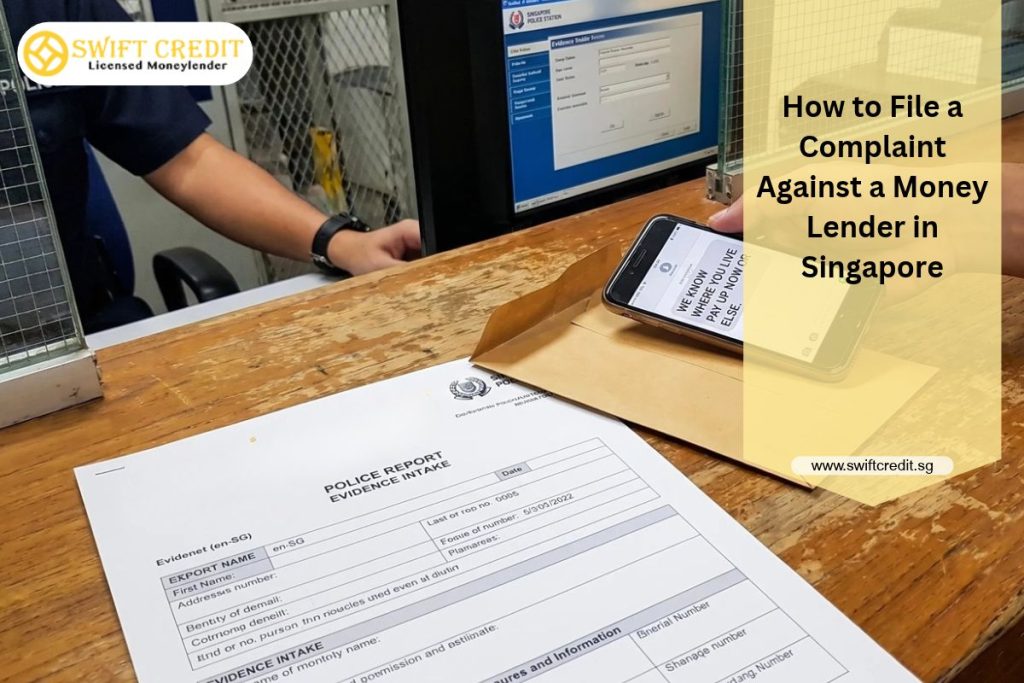
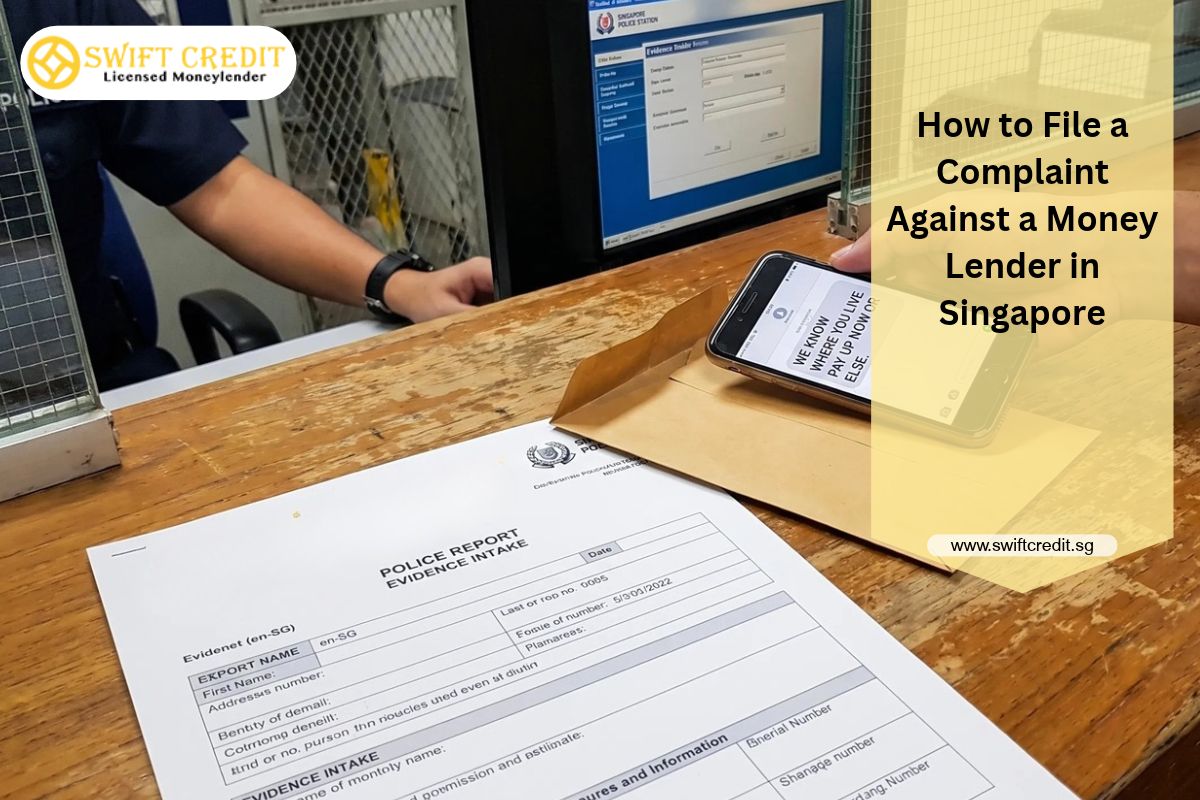
For non-emergency incidents, use the reporting channels available through the Singapore Police Force or visit a police station. Preserve messages, photographs and other evidence without putting yourself at risk. Suspected unlicensed lending should also be reported to the police.
Send Regulatory Concerns To The Registry
The Registry of Moneylenders, under the Ministry of Law (MinLaw), handles complaints about licensed lenders’ conduct. Examples include potentially unlawful charges, withholding loan documents or receipts and abusive behaviour.
If you are unsure whether the money lender is licensed, check its legal name and business address against the Registry’s official list of licensed moneylenders.
| Issue | Appropriate Starting Point |
|---|---|
| Possible breach of licensed lending rules | Registry of Moneylenders |
| Threats, violence or suspected criminal activity | Singapore Police Force |
| Unclear account entry or ordinary service issue | Lender’s official contact channel, if safe |
| Disputed refund or contractual remedy | Legal advice, alongside any regulatory complaint |
You do not need to finish an internal complaint process before reporting serious misconduct to the authorities.
Gather Evidence Before Submitting Your Complaint
A clear evidence file helps the authority understand what happened. Keep original documents and unedited messages wherever possible rather than relying only on your recollection.
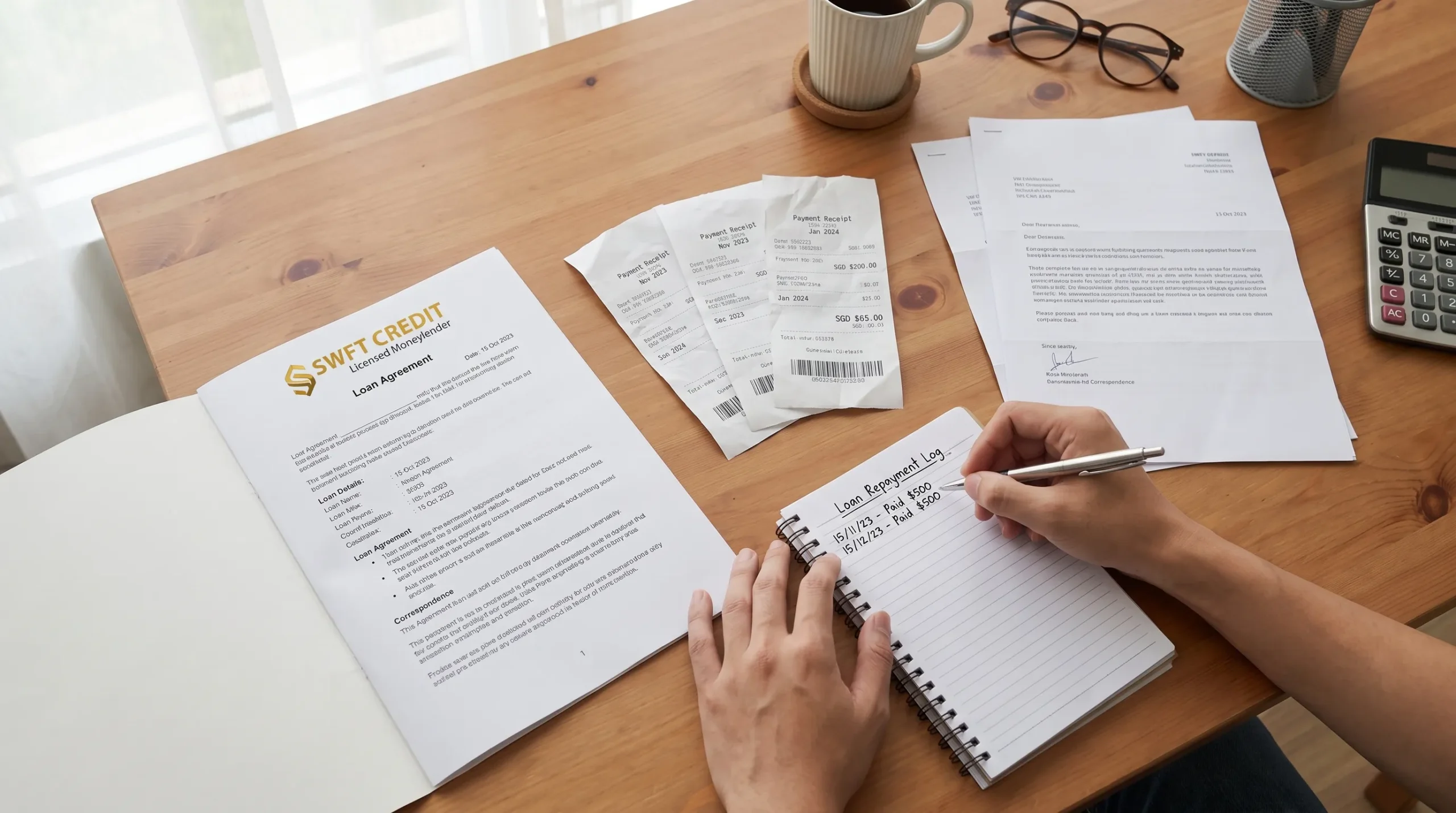
Keep Loan Documents And Payment Records
Collect the records relevant to the issue:
- Lender details: Legal business name, licence number if available, office address and contact information.
- Loan records: Loan agreement, repayment schedule and statements of account.
- Payment evidence: Receipts, bank transfers and records showing the amount actually disbursed.
- Communications: Messages, emails and call logs connected to the incident.
- Incident details: Dates, locations, staff names and witness information, where known.
If your complaint involves a foreigner loan, keep copies of your work pass, employment details and any documents submitted during the loan application. Foreign borrowers in Singapore can report suspected misconduct through the same official channels as Singapore citizens and permanent residents.
Your money lender complaint should connect each allegation to a specific document or event. For example, identify the disputed fee, the date it appeared and the receipt or account statement showing it.
If charges are the concern, compare your records with the permitted charges in the Registry’s borrower guidance. Swift Credit’s explanation of moneylender fees in Singapore can help you understand the terminology, but use the official guidance when checking legal limits.
Write A Short Timeline
Set out events in date order: when the loan was signed, when funds were received, when payments were made and when the disputed conduct occurred.
Distinguish facts from assumptions. “I transferred S$300 on 5 October and the statement still shows it as unpaid” is more useful than “the lender is dishonest”. If you do not know who contacted you, record the number and what was said without guessing their identity.
How To File A Money Lender Complaint With MinLaw
Once your records are organised, prepare a concise account of the issue. Explain the conduct first, then provide supporting documents and the outcome you are requesting.
Use The Official Enquiry Portal
Submit your complaint through MinLaw’s official enquiry portal, following the current options for complaints involving licensed moneylenders. You can also contact MinLaw at 1800 2255 529 for guidance on the reporting process.
When submitting a money lender complaint, include your contact details, the lender’s identity, your loan reference if available and a dated description of the incident. Provide the documents requested by the portal. If attachments cannot be submitted, explain what evidence you hold and ask how to provide it securely.
Save a copy of your submission, any acknowledgement and the reference number provided. These will help you follow up without starting the explanation again.
Explain What You Want Investigated
State the issue precisely. You might ask the Registry to examine an allegedly improper charge, failure to provide receipts or threatening conduct during collection.
Keep your requested outcome separate from the allegation. Asking for an account correction or refund makes your position clear, but a regulatory report does not guarantee that remedy. If several incidents occurred, describe each with its date and supporting evidence rather than submitting a long, unfocused account.
What To Do After Filing
The Registry may request clarification or additional documents. Respond promptly and retain copies of anything you provide. Do not assume there is a fixed investigation deadline or a guaranteed outcome.
Continue Managing Your Repayment Obligations
A complaint against a money lender does not automatically suspend repayments, cancel the agreement or remove outstanding debt. Avoid assuming that filing a report permits you to stop paying.
If you dispute a charge, request an itemised explanation and written clarification of the balance. Seek legal advice before deciding to withhold payment. If repayment is becoming unaffordable, raise that separately with the lender and retain any written response. A complaint and a request to change repayment arrangements serve different purposes.
Record Further Incidents And Follow Up
Keep any new messages, receipts or collection notices received after filing. Send relevant updates through the appropriate official channel and quote your complaint reference.
If a new incident involves threats or suspected criminal behaviour, report it to the police rather than waiting for the regulatory investigation.
For unresolved contractual disputes, consider legal advice. Eligible applicants can explore assistance through the Legal Aid Bureau, subject to its eligibility requirements and scope of services. A regulatory investigation is not a substitute for advice about recovering money or pursuing a civil remedy.
Use A Clear Complaint Summary
A short summary can make your evidence easier to assess. Adapt this example to your circumstances and remove anything that does not apply:
I wish to report conduct by [lender’s legal name and office address] concerning loan [reference]. On [date], [describe the specific incident]. My agreement or payment records show [relevant detail], but [explain the discrepancy or conduct]. I contacted the lender on [date], and [state the response, if any]. I have retained [supporting documents]. Please assess whether the money lender has breached the applicable rules and advise what further information is required.
Avoid including unrelated allegations or publishing sensitive loan documents on social media. Submit evidence through official channels instead.
Frequently Asked Questions
Must I Contact The Lender Before Filing?
Not necessarily. Asking for clarification can resolve an ordinary accounting or service issue, but you should not delay reporting suspected serious misconduct. If contacting the lender feels unsafe, approach the relevant authority directly.
Can I Complain Without A Loan Agreement?
You can still report your concern. Explain that the agreement is missing or was not provided, and supply other evidence such as transfers, messages or receipts. Missing documents may themselves be relevant to the complaint.
Will A Complaint Cancel My Loan Or Guarantee A Refund?
No. Filing a complaint does not automatically cancel your obligations or secure compensation. A money lender may be investigated for regulatory breaches, while repayment disputes or recovery of money may require separate advice or action.
Can I Submit An Anonymous Complaint?
Do not assume anonymity. Investigators may need your identity, contact details and supporting records to assess the allegation. If confidentiality concerns you, ask the Registry how your information will be handled before submitting sensitive material.
Raise Your Concern Through The Appropriate Channel
For a complaint involving Swift Credit’s personal loan service in Singapore, provide your loan reference and the relevant documents through its official contact channel, if safe. Request a written explanation of the disputed issue. You retain the right to report regulatory concerns to MinLaw or suspected criminal conduct to the police, regardless of any internal response.