Making the final repayment on a loan is an important financial milestone. However, transferring the last instalment does not mean you should immediately discard your contract, receipts or account statements.
After completing a licensed moneylender loan settlement in Singapore, check that your payment has been correctly recorded, confirm that there is no remaining balance and retain sufficient documentation showing that you fulfilled your repayment obligations.
This guide explains what to verify after your last payment, which documents to keep and what to do if your records still show an outstanding amount.
Key Takeaways
- Confirm the exact settlement amount before making your final payment.
- Pay only through an official payment method provided by the licensed moneylender.
- Obtain and check a receipt for the final repayment.
- Request an updated statement showing that no further scheduled payment remains.
- Keep your contract, receipts, bank records and account statements together.
- Contact the lender promptly if the recorded balance does not match your calculations.
- Do not assume that cancelling a GIRO arrangement proves that the loan is settled.
- Never pay an unknown collector or personal bank account without verification.
What Is a Loan Settlement?
A loan is settled when all amounts properly payable under the agreement have been paid and the borrower has no remaining repayment obligation under that account.
Depending on the loan and payment history, the final amount may include:
- Remaining principal
- Contractual interest
- Any permitted late interest
- Applicable late fees
- Other lawful amounts stated in the contract
The final payment may therefore differ from the amount of a normal instalment.
Before transferring money, contact the lender and request the updated amount required to settle the account on the intended payment date.
Why Should You Confirm the Settlement Amount First?
A repayment schedule is based on the original contractual dates. The amount needed for early settlement—or settlement after a delayed instalment—may not be identical to the amount shown beside the final scheduled payment.
For example, your account could have:
- A payment that was made earlier than scheduled
- An overdue instalment
- A partial payment
- Permitted late charges
- A payment that has not yet been reflected
- A revised repayment arrangement
- An early-repayment adjustment
Requesting an updated figure reduces the risk of paying too little or transferring more than necessary.
Ask the lender to explain how the final amount was calculated if it differs from your records.
Seven Things to Check After Your Final Repayment
1. Check that the payment went to the correct account
Use only a payment channel officially provided by the licensed moneylender.
Depending on the lender, repayment methods may include:
- GIRO
- Bank transfer
- PayNow to an authorised business account
- Payment at the licensed business premises
- Another method stated in the loan documents
Check the recipient’s name before confirming an electronic transfer. Do not transfer money to an unfamiliar personal account simply because someone contacts you claiming to represent the lender.
If you receive new payment instructions unexpectedly, call the lender using the number displayed on its official website or the Registry of Moneylenders listing.
2. Obtain a receipt for the final payment
The Ministry of Law advises borrowers to obtain a receipt whenever they make a repayment and check that the information is correct.
Your receipt should accurately identify:
- Borrower’s name
- Loan account
- Payment date
- Amount received
- Payment method
- Lender’s identity
- Remaining balance, where shown
Do not discard the bank-transfer confirmation just because the lender has issued a receipt. Keep both records.
A transfer record proves that money left your account, while the lender’s receipt confirms that it was received and applied to the loan.
3. Review the updated statement of account
A statement of account provides a broader history than an individual payment receipt.
It may show:
- Original principal
- Interest and fees
- Payments received
- Dates of repayment
- Outstanding principal
- Overdue amounts
- Remaining balance
Compare the statement against your receipts and bank records.
The Ministry of Law advises borrowers to retain their account statements and payment receipts as documentation and evidence of repayment.
4. Confirm that no further scheduled payment remains
Check whether the final payment has cleared the account rather than merely bringing it up to date.
These are not the same thing:
- Account brought up to date: No payment is presently overdue, but future instalments remain.
- Account fully settled: No further scheduled payment remains under the loan.
If the status is unclear, ask the lender directly whether any principal, interest, fee or scheduled instalment remains payable.
5. Request written closure confirmation
You may ask for written confirmation that the loan has been fully repaid and that no further scheduled balance remains.
The confirmation could identify:
- Borrower’s name
- Loan-account reference
- Date of final payment
- Confirmation that the account is settled
- Lender’s company name
- Date the confirmation was issued
A separate settlement letter should not be confused with the receipts and statements that borrowers are advised to retain. Ask the lender what form of closure confirmation it can provide.
6. Check your automatic-payment arrangements
If repayment was made through GIRO or another recurring instruction, check whether future deductions have been cancelled after settlement.
Do not cancel a recurring payment before confirming that the final amount has been successfully collected and credited.
Cancelling GIRO does not itself settle the loan. It only stops or changes a payment instruction.
Keep evidence of:
- The final successful deduction
- Any cancellation request
- Confirmation that no further deduction is required
- Any refund if an excess amount was collected
7. Store the records securely
Keep the documents in both physical and digital form where possible.
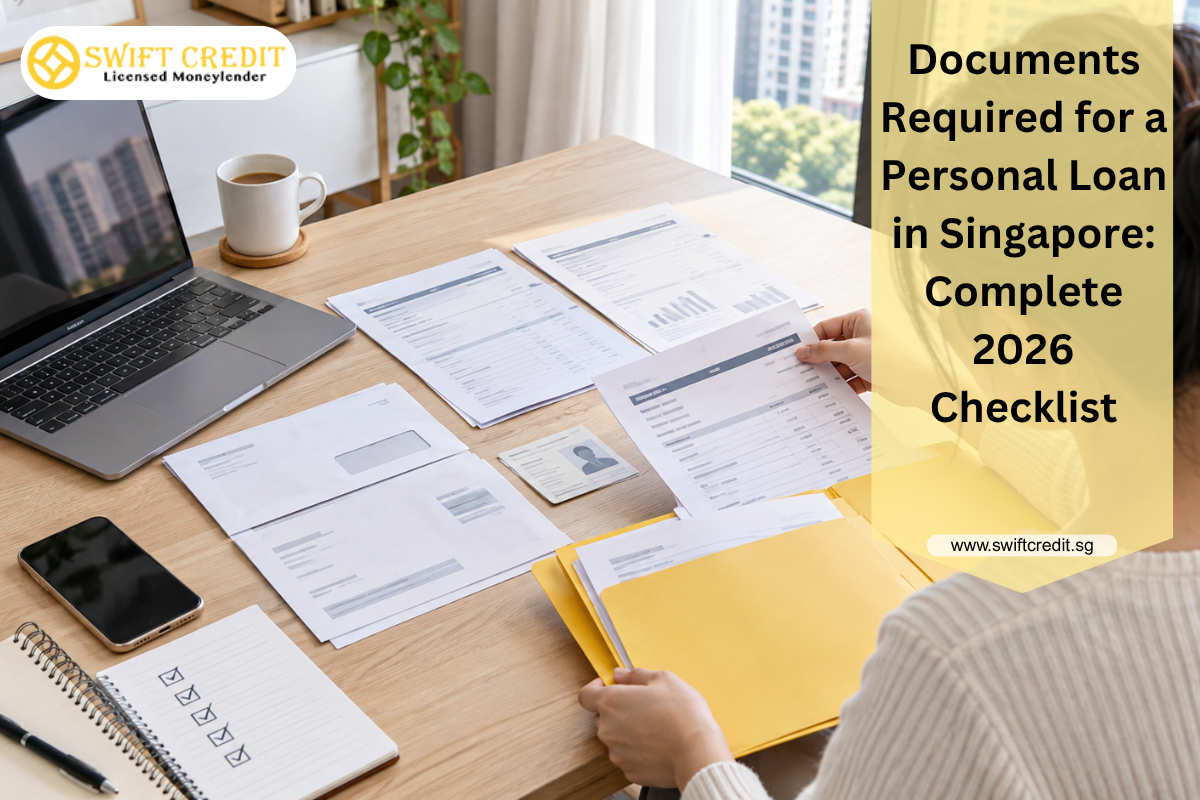
Your settlement file should include:
- Signed Note of Contract
- Original repayment schedule
- Receipts for every repayment
- Bank-transfer confirmations
- Account statements
- Written changes to the repayment arrangement
- Final-payment receipt
- Closure or settlement confirmation
- Relevant emails or official messages
Use a clear filename for every scanned document, such as:
Swift-Credit-Final-Payment-Receipt-2026-10-26.pdf
Do not store unprotected documents containing NRIC numbers, addresses or financial information in a publicly accessible folder.
How Long Should You Keep Your Loan Documents?
There is no advantage in immediately deleting your records after settlement.
Keep them for a reasonable period so you can respond if:
- A payment is recorded incorrectly
- An unexpected deduction occurs
- You need to verify the loan’s closure
- A discrepancy appears in a later account record
- You need evidence for a complaint or legal matter
- You want to reconstruct your financial history
Digital copies are useful, but retain original documents where they contain signatures or official confirmation.
What If the Statement Still Shows an Outstanding Balance?
Do not ignore an unexpected balance, but do not make another payment without understanding it.
Contact the lender and request an itemised explanation showing:
- Original principal
- Principal already repaid
- Contractual interest charged
- Late interest, if applicable
- Late fees, if applicable
- Every payment received
- Remaining amount
- Date used for the calculation
Compare this breakdown with your contract, receipts and bank records.
A discrepancy could arise because:
- The latest transfer is still being processed
- An incorrect reference number was used
- A payment was applied to another account
- A permitted charge remains unpaid
- Your calculation did not include the settlement date
- A receipt or account entry contains an error
Communicate in writing where possible and retain copies of the correspondence.
Can You Settle a Loan Early?
A borrower may ask for the amount required to repay a loan before the final scheduled date.
Before proceeding, request confirmation of:
- Outstanding principal
- Interest calculated up to the settlement date
- Any applicable contractual amount
- Final settlement figure
- Date until which the quotation is valid
- Accepted payment method
- Confirmation procedure after payment
Swift Credit states in its FAQs that it does not impose an early-repayment penalty on its loans. However, borrowers should still request an updated settlement quotation because the amount due must be calculated using the actual account position.
If you are considering early repayment, compare the settlement amount with your remaining scheduled payments. Do not use another costly loan simply to close the first account unless the replacement genuinely improves your financial position.
What If You Overpay the Loan?
If your transfer exceeds the confirmed settlement figure, contact the lender and provide:
- Loan-account number
- Payment date
- Amount transferred
- Bank-transaction reference
- Confirmed settlement amount
- Copy of the transfer record
Ask whether the account has a credit balance and what process is required for a refund.
Do not share your banking password, one-time password or Singpass credentials to receive a refund. A legitimate refund should not require you to disclose security credentials.
What If You Cannot Afford the Final Payment?
Do not wait until the due date has passed before communicating.
Review how much you can realistically pay after essential living expenses, then contact the lender to explain your circumstances.
You may be asked for updated documents such as:
- Payslips
- Bank statements
- Employment records
- Evidence of reduced income
- Medical documentation
- Details of other debts
Any revised arrangement is subject to assessment and agreement. Obtain the revised terms in writing before relying on them.
Borrowers experiencing difficulty with several licensed-moneylender debts may also review Swift Credit’s debt consolidation loan information or seek independent assistance from Credit Counselling Singapore.
Do not repeatedly borrow to meet existing instalments without reviewing whether the new repayment obligation is sustainable.
What Happens to Your MLCB Record?
Licensed moneylender applications and repayment information are recorded within the Moneylenders Credit Bureau system.
A fully repaid loan forms part of your borrowing history. Keeping your final receipt and account records allows you to raise an enquiry if your understanding of the account differs from information presented during a later loan assessment.
MLCB is separate from Credit Bureau Singapore, which is commonly used by banks. However, borrowers should still maintain accurate records and repay according to the agreed schedule.
Final Repayment Checklist
Use this checklist before considering your account closed:
-
Requested the updated settlement amount
- Verified the official payment channel
- Made the final payment
- Saved the bank-transfer confirmation
- Received the lender’s receipt
- Checked the receipt for accuracy
- Reviewed the updated statement
- Confirmed that no further instalment remains
- Checked GIRO or recurring-payment status
- Requested written closure confirmation
- Stored all records securely
Frequently Asked Questions
How do I know whether my moneylender loan is fully paid?
Confirm the position directly with the lender and review an updated statement showing your payments and remaining balance. Keep the receipt for your final repayment and request written closure confirmation.
Is a bank-transfer screenshot enough?
A screenshot is useful evidence that a transfer was initiated, but it may not prove that the lender received and correctly applied it. Keep the lender-issued receipt and updated account statement as well.
Should I receive a receipt for every loan repayment?
Yes. The Ministry of Law advises borrowers to ensure that the moneylender issues a receipt whenever a repayment is made and to check the receipt for correctness.
What details should I check on a payment receipt?
Check the borrower’s name, date, payment amount, lender’s identity and relevant loan-account information. Report any error promptly.
Can I cancel GIRO after making the final payment?
Confirm that the payment has cleared and that the account is settled before changing the GIRO instruction. Cancelling GIRO does not itself prove that the debt has been repaid.
Does early repayment automatically reduce the settlement amount?
Early settlement may reduce the period during which interest accrues, but the final result depends on the agreement and current account position. Request an exact settlement quotation rather than estimating it yourself.
What should I do if the lender says I still owe money?
Request an itemised statement and compare it with your contract, repayment schedule, receipts and bank records. Ask for a written explanation of every disputed amount.
Should I keep documents after the loan is settled?
Yes. Retaining contracts, statements, receipts and closure confirmation provides evidence if a discrepancy arises later.
Final Thoughts
Completing your final repayment is only one part of a proper licensed moneylender loan settlement in Singapore.
Verify the payment channel, obtain a correct receipt, review your latest statement and confirm in writing that no further scheduled balance remains. Keeping complete records protects you if a payment, deduction or account status is later disputed.
Swift Credit Pte Ltd has operated as a licensed moneylender in Singapore since 2009. Borrowers can review its personal loan options, use the loan calculator or contact Swift Credit for clarification about an existing account.
This article provides general educational information and does not constitute financial or legal advice.